A one-day heritage expedition to Lepakshi where students explore how a civilisation expressed its stories, beliefs and knowledge through stone. Through temple architecture, engineering, murals, sculpture and mythology, students observe, question and interpret historical evidence while connecting history, art, mathematics, engineering and cultural memory through an immersive field-learning experience.
OUR PHILOSOPHY

OUR LEARNING FRAMEWORK
At Crazy Holidays, we believe learning happens best when students experience, reflect, and apply.
We don’t organize trips.We design curriculum-connected learning journeys that build:
HOW WE DELIVER OUTCOMES

|
INTRODUCTION TO THE PROGRAM: This one-day experiential learning programme takes students into the heritage landscape of Lepakshi, where architecture, sculpture, engineering, art, mythology and cultural memory come together. Through guided exploration of the Veerabhadra Temple, Hanging Pillar, Vijayanagara murals, Kalyana Mantapa, Nagalinga, Monolithic Nandi and Jatayu, students investigate how a civilisation can communicate its knowledge, beliefs and stories through stone. |
|
OBJECTIVE: To enable students to understand how the Vijayanagara civilisation expressed engineering knowledge, artistic skill, cultural beliefs and historical narratives through architecture and stone craftsmanship. The programme encourages observation, inquiry, critical thinking, visual interpretation and reflection through direct engagement with Lepakshi's heritage. |
|
WHY IT MATTERS: Heritage is not simply something to be visited — it is something to be read, interpreted and understood. At Lepakshi, students discover how a civilisation can leave behind evidence of its knowledge through structures, sculptures, paintings, engineering techniques, mythology and cultural traditions. By examining these elements in their original context, students begin to understand how physical heritage can preserve stories and knowledge across generations. |
|
ABOUT THE PROGRAMME: Students explore Lepakshi through four interconnected dimensions:
|
|
LEARNING TAKEAWAY: Students return with the ability to:
|
|
04:45 AM – Reporting at School: Students assemble with excitement, ready to begin their historical journey. They board the private coach, eager for the day ahead. |
|
05:00 AM – Departure from School: The expedition begins early in the morning as students board the coach for a journey into one of South India's remarkable heritage landscapes. During the journey, students are introduced to the day's central theme: “How can a civilisation tell its story through stone?” The pre-tour orientation introduces students to the Vijayanagara Empire, temple architecture, traditional engineering, sculpture, mural painting and the cultural traditions associated with Lepakshi. |
|
07:00 AM – Breakfast En Route: Students enjoy breakfast en route before continuing their journey towards Lepakshi. |
|
10:00 AM – Arrival At Lepakshi: Students arrive at Lepakshi and begin their heritage exploration. The Veerabhadra Temple, a significant Vijayanagara-era monument, becomes the central learning site for the day, allowing students to experience architecture, sculpture and historical narratives in their original context. |
|
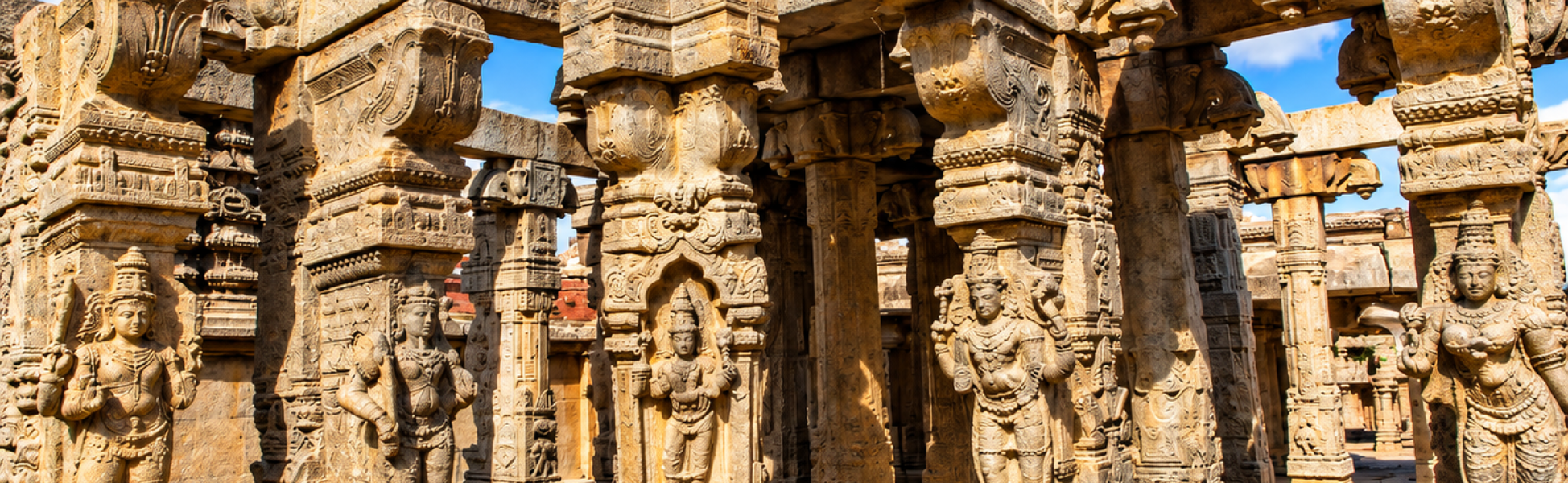
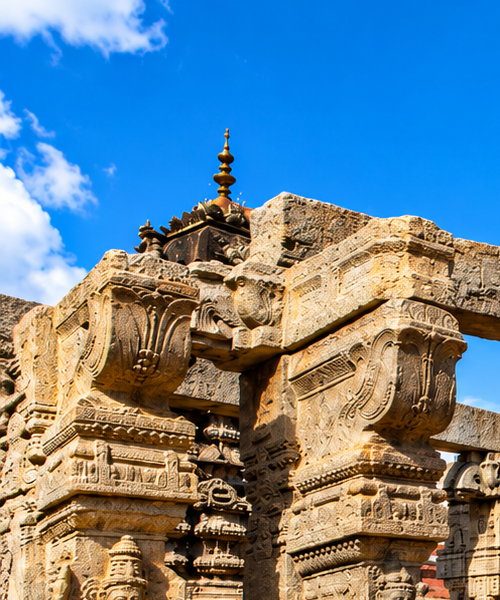
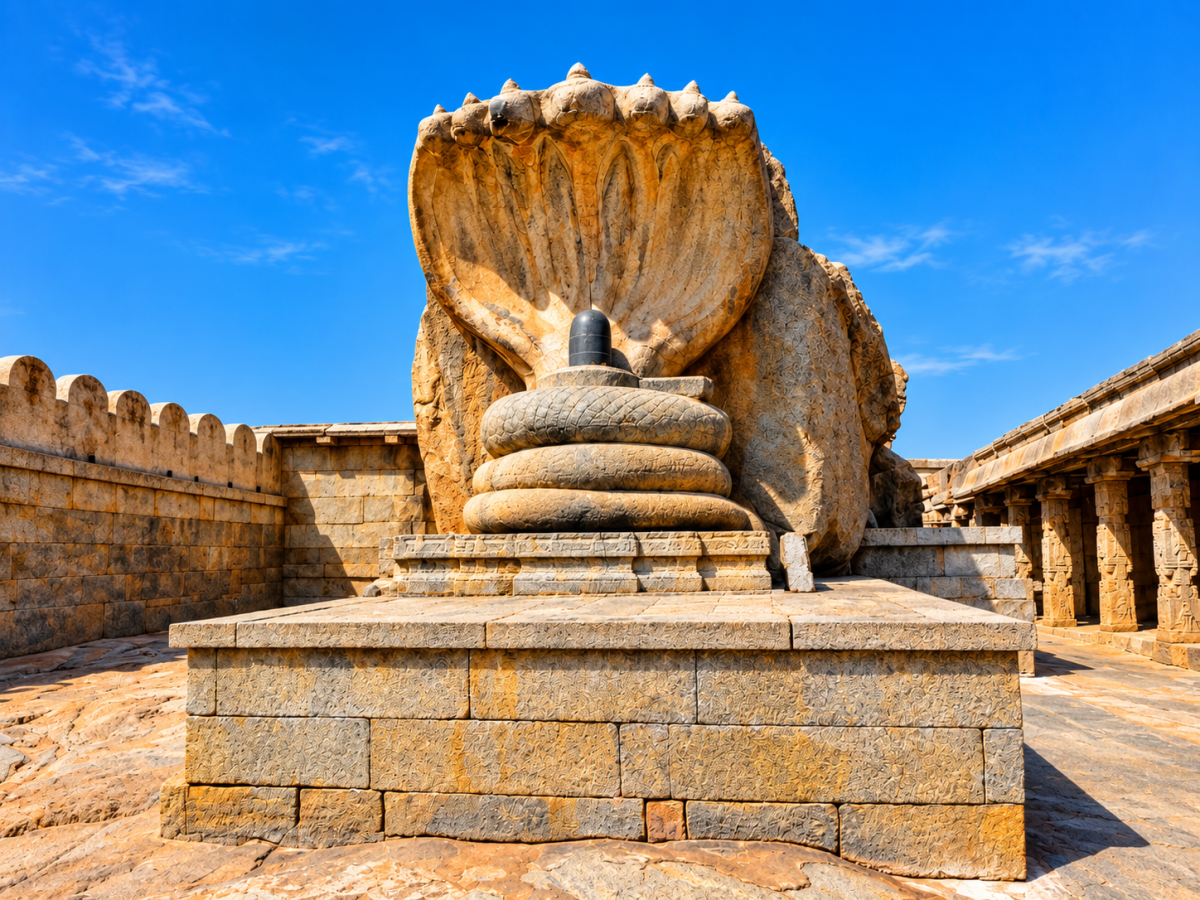
10:00 AM – Veerabhadra Temple Heritage Walk: Students undertake a guided exploration of the temple complex, observing how architecture, sculpture and mythology come together to communicate stories from the past. The Hanging Pillar Students examine the famous Hanging Pillar and explore the architectural and engineering principles that allow the pillar to appear suspended above the ground. Learning Focus: Structural Engineering | Architecture | Observation | Critical Thinking Vijayanagara Murals Students observe the intricate ceiling paintings and identify visual elements such as characters, costumes, expressions, patterns and narrative scenes. Learning Focus: Art History | Visual Literacy | Cultural Studies Kalyana Mantapa Students explore the intricately carved pillars and unfinished architectural elements. Through guided observation, they identify human figures, animals, mythological characters, floral motifs and geometric patterns. Learning Focus: Sculpture | Design | Architecture | Visual Interpretation Nagalinga Students observe the magnificent monolithic Nagalinga sculpture and explore how craftsmen transformed stone into detailed religious and cultural imagery. Learning Focus: Stone Craftsmanship | Sculpture | Cultural Heritage |
|
11:30 AM – The Lepakshi Stone Lab: Students participate in an experiential: Observe → Question → Decode → Interpret Working in small groups, students investigate:
Students record their observations in their Heritage Field Journal. |
|
12:00 PM – Monolithic Nandi: Students visit the magnificent Monolithic Nandi, carved from a single block of stone. The visit provides an opportunity to investigate the scale, craftsmanship, proportion and techniques involved in creating monumental stone sculpture. STUDENT CHALLENGE – “ONE STONE. ONE MASTERPIECE.” Students examine: Scale → Proportion → Material → Technique → Purpose Learning Focus: Engineering | Mathematics | Sculpture | History |
|
01:00 PM – Lunch: Enjoy a wholesome lunch at a pre-arranged venue, followed by a short relaxation break. |
|
02:30 PM – Jatayu & The Cultural Landscape of Lepakshi: Students explore the Jatayu attraction and the cultural traditions associated with the Ramayana. The experience encourages students to consider how mythology, oral traditions and geographical landscapes become interconnected over generations. Reflection Question: “When does a story become part of a place's heritage?” Learning Focus: Mythology | Literature | Cultural Memory | Geography |
|
03:30 PM – Heritage Field Journal & Reflection Before beginning the return journey, students consolidate their observations through a structured reflection activity. Students document:
|
|
04:00 PM – Depart Lepakshi: The return journey to Bengaluru begins. Students participate in an interactive Heritage Quiz & Reflection Activity during the journey, revisiting the day's discoveries and connecting them with their classroom learning. |
|
07:30 PM – Arrival At School, Bengaluru: Students arrive back at school, concluding their exploration of how architecture, engineering, art and cultural memory can preserve the story of a civilisation. |
|
LEARNING OUTCOMES: By the end of this programme, students will be able to:
|
|
SKILLS DEVELOPED: Observation, Historical Inquiry, Critical Thinking, Structural Thinking, Visual Literacy, Cultural Awareness, Interpretation, Questioning, Communication and Reflection. |
|
SAFETY & SUPPORT: First-aid certified staff and lifeguards on-site, Activity facilitators with experience in child development, Hygienic food & clean water throughout the program 15:1 Student- Adult ratio for close supervision, Contactable emergency support and live location tracking |
|
WHY SCHOOLS SHOULD CHOOSE THIS: Professionally curated, curriculum-linked learning Holistic support from experienced tour operators. Documentation and learning resources provided. Emphasis on student safety, engagement, and reflection |
|
CRAZY HOLIDAYS BOOKING PROCEDURE: STEP 1: Once you finalize the itinerary and travel dates of your choice, please contact our executive to confirm availability. STEP 2: After availability is confirmed and approved by the school, a payment circular will be forwarded Along with the track my tour details. STEP 3: Once the list of registered students is finalized will be sharing a revised final itinerary for the programmes. STEP 4: Sharing required documents for the programme & collecting from the school tour coordinator {in school letter head}. |
|
COMPLIMENTARY RATIO FOR STUDENT: TEACHER {INCLUDING NON-TEACHING STAFF} 15:01 |
|
NB: Once the trip is confirmed with the marketing executive, for any further information or status or details regarding the bookings kindly coordinate with our operation head MRS. ANNIE: 99161 01317, Email id: annie@crazyholidays.in |
|
Kindly submit the final number of students registered details latest by 3 working days before the departure date. |
|
To ensure a secure and informative experience for the parents, we offer "Track My Tour" facility, which allows the parents to view photos, videos and live bus tracking of the children during the trip. |
|
NB: Please note that we will only take group photographs, which will be verified by our backend team before uploading and could be viewed only by school & parents by using a secure code. A copy of the group photographs will also be shared with the school as a memento. |
|
If you do not wish to utilize this facility, kindly inform us via email neha@crazyholidays.in NB: In the event of not receiving any instruction to RESTRICT by email.....will be considered as an APPROVAL from your end |
|
Special instructions By the School for Crazy Holidays Team: 1._______________________________________________________ 2._______________________________________________________ 3._______________________________________________________ |
RULES & REGULATIONS:
Any cancellation /postponement to be informed minimum 7 days in advance. For any cancellation / postponement charges will be applicable as per resort/transport Company policies.
THE TOUR COST INCLUDES: The above package is inclusive of Transport, Breakfast, Lunch, Snacks, Entry tickets and Service of Our Tour Managers.
THE TOUR COST DOES NOT INCLUDE: The above package doesn`t include Complimentary Rooms and Other Facilities/Activities not mentioned in “INCLUSIONS”...
 About Us
 Careers
 Signup
 Login
Login